

If you buy electrical products, appliances, or industrial equipment for the U.S. or Canadian market, you may have seen an ETL mark on a product label. But what does the ETL mark mean? And what is the difference between ETL, cETL, and cETLus?
Understanding these markings can help you evaluate product safety certification, compare certification options, and avoid compliance problems when sourcing products from China.
In this guide, we explain what the ETL mark means, how to read its country identifiers, and how ETL certification compares with UL and CSA certification.
1. What Is the ETL Mark?
The ETL Listed Mark is a product safety certification mark issued by Intertek, an independent testing and certification organization. It indicates that a product has been tested and certified to applicable safety standards within the scope of its certification.
In the United States, Intertek is recognized by the Occupational Safety and Health Administration (OSHA) as a Nationally Recognized Testing Laboratory (NRTL) for specific products and standards. ETL certification can demonstrate compliance with applicable U.S. safety requirements. Products certified for Canada may also carry the Canadian identifier.
The ETL mark can appear on many types of products, including electrical appliances, lighting equipment, electronics, and certain industrial products. The applicable standards depend on the product category and its intended use.
For buyers, the key point is that an ETL mark is not simply a manufacturer's claim. It represents third-party testing and certification. However, you should still verify the product model and certification scope before purchasing or installing the equipment.
To learn more about the certification process, see our guide to ETL Certification: A Step-by-Step Guide.
2. What Do ETL, cETL, and cETLus Mean?
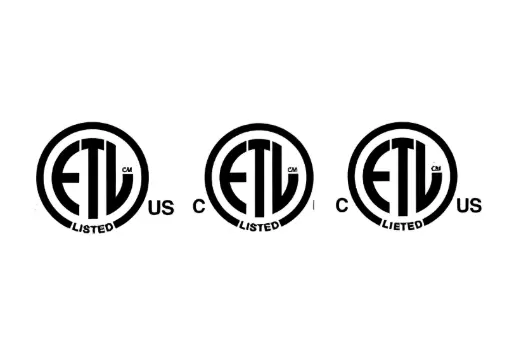
The letters “C” and “US” around the ETL mark identify the market requirements covered by the certification. They are important when deciding whether a product is suitable for the United States, Canada, or both.
ETL Listed US
An ETL mark with the “US” identifier indicates that the product has been evaluated and certified to applicable U.S. safety requirements within the scope of its certification.
This marking may be relevant for products intended for sale or use in the United States. Buyers should confirm that the certification covers the exact product type and intended application.
cETL Listed
A “c” identifier next to the ETL mark indicates certification to applicable Canadian safety requirements. It is commonly described as the Canadian ETL mark, or cETL.
For products intended for the Canadian market, check that the certification covers the relevant Canadian requirements and the product's intended use.
cETLus Listed
When the ETL mark displays both “C” and “US” identifiers, it indicates that the product's certification covers applicable safety requirements for both Canada and the United States.
This can be useful for manufacturers and buyers supplying both markets. However, the combined marking does not automatically mean that every model or configuration from the same manufacturer is certified for both countries. Always verify the specific listing.
Quick comparison:
- ETL Listed US: Applicable U.S. requirements.
- cETL Listed: Applicable Canadian requirements.
- cETLus Listed: Applicable requirements for both the U.S. and Canada.
The exact certification scope matters more than the appearance of the logo alone. You can verify a product through Intertek's official directory of listed products.
3. Is ETL Certification Accepted in the United States and Canada?
ETL certification is widely recognized in North America. Intertek is an OSHA-recognized NRTL for specified products and standards in the United States, and it provides certification for products intended for the Canadian market.
For U.S. workplace applications, certain products may need to be certified by an OSHA-recognized NRTL when required by applicable OSHA regulations or other relevant rules. ETL can be one option when the product and standard fall within Intertek's recognized scope.
In Canada, product acceptance depends on the applicable Canadian requirements, the certification scope, and the relevant provincial or local rules. Buyers should confirm that the product carries the appropriate Canadian certification.
Keep in mind that a certification mark does not replace every regulatory, installation, building-code, or customer-specific requirement. For example, a product may need additional assessment depending on where and how it will be installed.
Before placing an order, confirm the requirements with your customer, distributor, installer, or local authority having jurisdiction (AHJ).
4. ETL vs. UL vs. CSA: What Is the Difference?
ETL, UL, and CSA are different certification marks associated with independent product testing and certification. The main difference is the organization issuing the certification, not necessarily the safety standard used.
For eligible products and applicable standards, ETL and UL certifications can provide recognized evidence of compliance with relevant U.S. safety requirements. ETL certification for Canada can also demonstrate compliance with applicable Canadian requirements.
This does not mean that every ETL, UL, or CSA mark is interchangeable in every situation. The product category, standard, country identifier, certification listing, and end customer's requirements all matter.
For a broader explanation of CSA markings, read our article: What Does the CSA Mark Mean?.
Which certification is better?
There is no single answer for every product. A buyer should not choose ETL, UL, or CSA based on brand recognition alone.
Instead, compare:
- The standards applicable to the product.
- Whether the certification covers the United States, Canada, or both.
- Requirements specified by the buyer, distributor, installer, or local inspector.
- Testing scope, project schedule, total cost, and ongoing certification obligations.
- Whether the certification organization can support the specific product and factory.
The most suitable option is the one that meets the applicable requirements and fits the product's intended market and project needs.
5. Which Products May Need ETL Certification?
ETL certification is available for a wide range of products, depending on the applicable standards and certification program. Examples may include:
- Electrical appliances and commercial equipment.
- Lighting products and LED equipment.
- Electronic products and power supplies.
- Heating, ventilation, and air-conditioning equipment.
- Industrial control panels, motors, and certain types of machinery.
Not every product follows the same certification route. A finished electrical product, a component used inside another product, and a large customized machine may require different evaluations.
If you are sourcing equipment from China, identify the exact product model, intended use, electrical ratings, installation environment, and destination market before selecting a certification program.
For machinery, it is especially important to establish whether the project requires product certification, a field evaluation, or another compliance route. Do not assume that a standard ETL Listed program is suitable for every customized or low-volume machine.
6. How Can You Verify an ETL Mark?
Before purchasing or importing a product, take the following steps:
- Identify the exact product. Record the manufacturer, model number, and relevant product details.
- Check the country identifiers. Determine whether the ETL mark shows “US,” “C,” or both.
- Search the official directory. Use Intertek's online listing resources to check the product and its certification details.
- Confirm the applicable standard. Make sure the certification relates to the actual product category and intended use.
- Check project requirements. Ask the customer, distributor, installer, or relevant local authority whether additional requirements apply.
Do not rely on a logo image alone. A genuine certification mark should correspond to an appropriate certification record and scope.
7. How Can Buyers Choose the Right Certification for Products Made in China?
For North American companies sourcing products or machinery from China, certification planning should begin before mass production or shipment.
First, determine whether the product will be sold or installed in the United States, Canada, or both. Then identify the applicable product standards and any requirements from the end customer, retailer, distributor, or installation site.
Next, review the manufacturer's existing technical documents, product design, critical components, and previous test reports. This information can help determine the likely testing scope and identify issues that may need to be addressed before certification.
Finally, compare the available certification routes. ETL, UL, CSA, and other compliance options should be evaluated according to the actual product, market requirements, schedule, and budget—not simply by choosing the most familiar logo.
Working with an experienced certification service provider can help buyers and Chinese manufacturers clarify requirements, coordinate testing, and reduce avoidable delays.
At An Teng, we help North American buyers and manufacturers in China assess product certification needs and coordinate the appropriate testing and certification process.
Planning to source products or machinery from China? Contact us with your product details, target market, and any existing technical documents. We can help you evaluate the next steps toward the appropriate North American certification route.
Frequently Asked Questions
Is ETL the same as UL?
No. ETL and UL are different certification marks issued by different organizations. For products covered by the relevant scopes and standards, both can demonstrate compliance with applicable U.S. safety requirements. The exact product listing and certification scope should always be checked.
Can I use an ETL-certified product in both the U.S. and Canada?
Only if the certification covers the applicable requirements for both markets and the product's intended use. Check the specific model and listing rather than assuming all ETL-certified products have dual-market coverage.
Can products made in China obtain ETL certification?
Yes. Products manufactured in China can be evaluated for ETL certification when the product and certification program are eligible. The required standards, testing scope, documentation, and factory-related obligations depend on the product and program.